
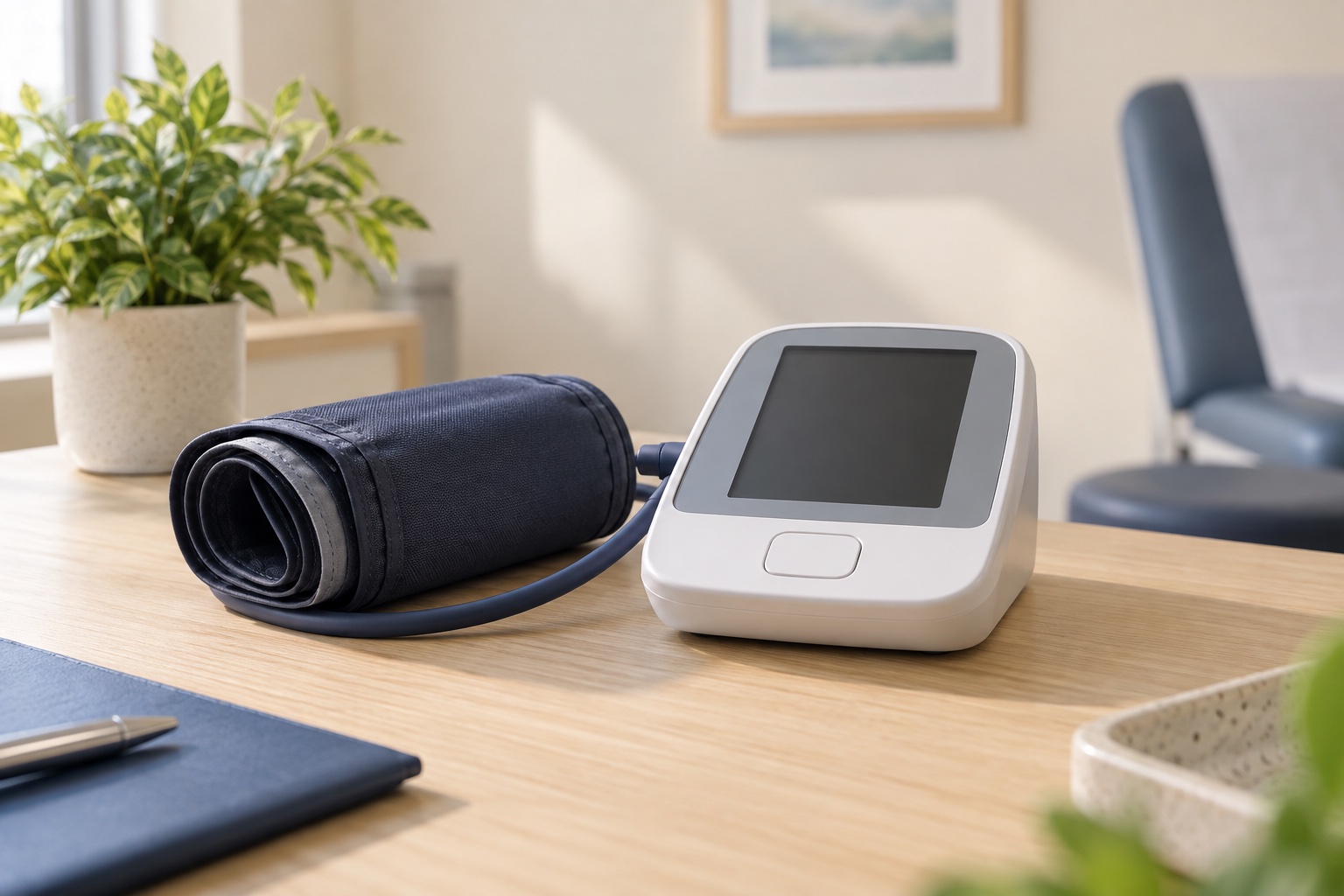
You sit down in the exam room, the cuff tightens, and the number comes back higher than you expected, maybe a lot higher than what you see at home. If that sounds familiar, you have plenty of company. About 1 in 5 adults have what we call white-coat hypertension: blood pressure that runs high in a medical setting but stays normal the rest of the time. It is real and it is common, and it matters because we need to know whether that high reading is ongoing hypertension or just a stress response to being at the doctor. Treat white-coat hypertension like the real thing and you end up on medication you do not need. Miss true hypertension and you leave a silent, progressive condition to do its damage. Telling the two apart is one of the most important things we do in primary care.

What's actually happening in your body
When you brace for something uncomfortable, whether it is a needle, bad news, or just the memory of a rushed appointment, your nervous system fires the same fight-or-flight response it would use in real danger. Your body releases adrenaline and cortisol, your heart speeds up, and your blood vessels tighten to push more blood to your muscles. All of that drives blood pressure up, sometimes by 20 or 30 points.
This is not "just anxiety" in the sense of something you should be able to talk yourself out of. The stress is physical, and your body is doing exactly what it evolved to do. The trouble is that a blood pressure cuff cannot tell the difference between a tiger in the room and a white coat across the desk. It only reports the number in front of it.
Some people have the opposite problem, which we call masked hypertension. Their readings look fine in the office but run high at home and during ordinary daily life. That is why one office reading, taken once a year at a physical, often tells us less than patients assume.
How we tell the difference
The best way to sort this out is to collect readings where you actually live, not where you feel like you are being judged. Home monitoring shows us a normal day instead of your most stressful fifteen minutes.
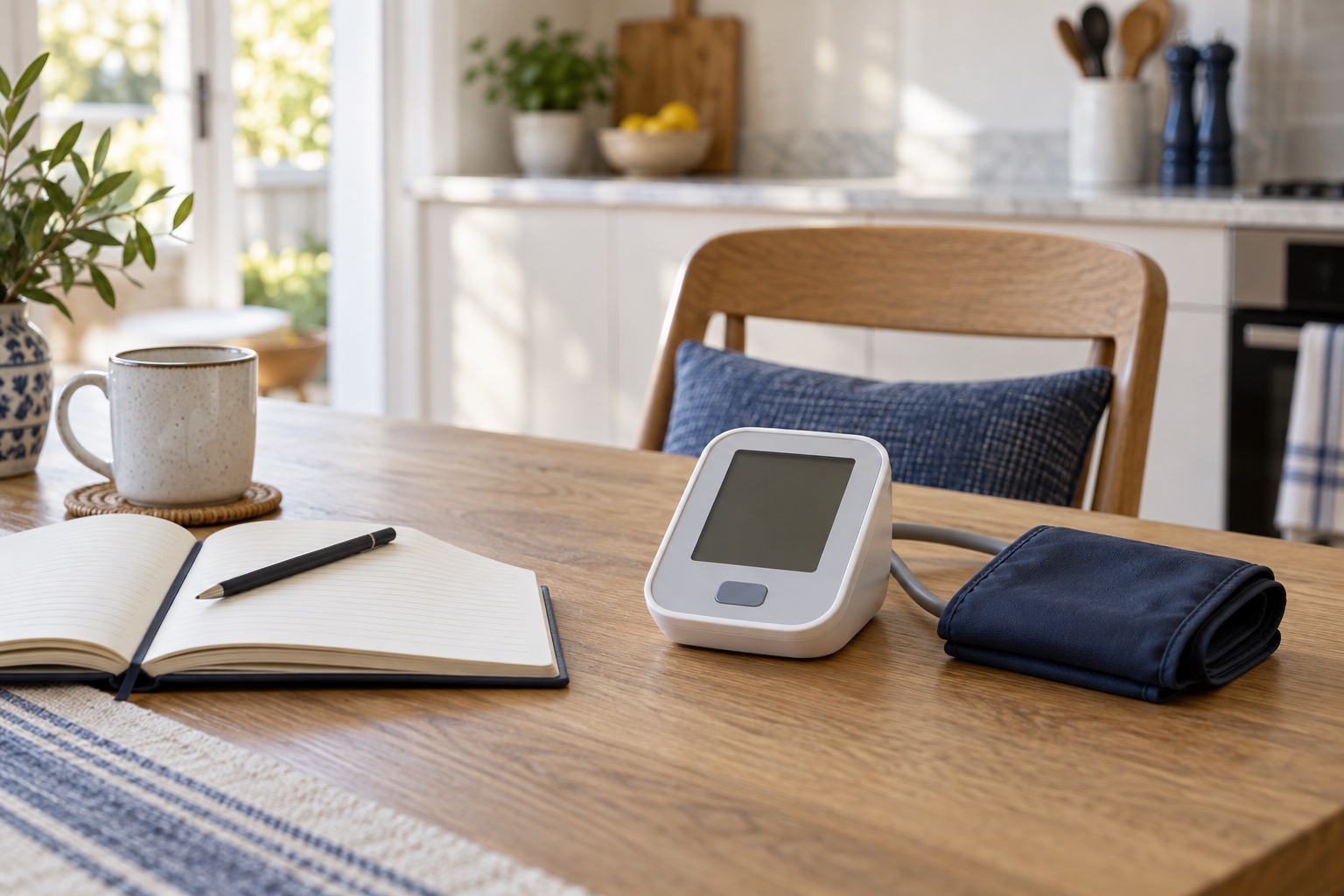
When I suspect white-coat hypertension, I usually ask patients to check twice a day for a week: once in the morning before coffee or medication, and once in the evening before bed. Sit quietly for five minutes first, feet flat on the floor and your arm resting at heart level, and use the same cuff each time. Throw out the first day while you get the hang of it. What I care about is days two through seven.
- Average home systolic below 130 and diastolic below 80 with normal office spikes suggests white-coat hypertension.
- Consistently elevated home readings, especially systolic at or above 130, point toward true hypertension regardless of what the office shows.
- When home data is inconclusive or we need a fuller picture, 24-hour ambulatory monitoring (a cuff you wear for a full day and night) is the most reliable tool we have.
We look for a pattern, not a single number. One high reading is a clue. A week of consistent readings is a story.
When it actually is hypertension, and why catching it early matters
Hypertension earned the nickname "the silent killer" because it rarely hurts until the damage is already done. Most people with Stage 1 hypertension, meaning readings that sit in the 130 to 139 over 80 to 89 range, feel completely fine. That is the trap. The whole time it goes unaddressed, the extra pressure is quietly straining your arteries, your heart, and your kidneys.
Over months and years, untreated hypertension thickens artery walls, raises your risk of stroke and heart attack, and wears down your kidneys. There is nothing dramatic about the timeline. You never wake up one morning suddenly sick, which is precisely why checking regularly matters. Catching it at Stage 1 gives us room to work. For some patients, lifestyle changes alone do the job, and when medication is needed, starting earlier usually means a lower dose works.
White-coat hypertension is not completely harmless, either. Research suggests that people whose pressure is repeatedly high only in the office still carry a somewhat higher cardiovascular risk over the years. So we take the pattern seriously instead of writing it off as nerves.
What we do at Divine Care Services
When a patient comes in worried about blood pressure, or with a confusing mix of high and normal readings, I start with your story rather than a prescription pad. We go through what you have been measuring at home, the medications you already take, how you are sleeping, how much salt and alcohol you take in, your family history, and whether anything in your life has shifted lately.
Where lifestyle changes make sense, we build a plan you can actually live with: a realistic salt target, movement that fits your joints and your schedule, better sleep, and stress management that amounts to more than "try to relax." When medication is the right next step, we pick a starting dose based on your whole picture and recheck in a few weeks rather than six months later.
Managing blood pressure is a long-term relationship, not a one-and-done fix. Most of my patients with elevated readings see me every few weeks at first, then every few months once we settle on a plan that holds. You will not be passed to a different provider each visit who has to read your chart from scratch. That continuity is how we catch trouble early and adjust before it turns into an emergency.
Your blood pressure tells a story. Book a visit and we will read it together.
Book a visit